


Navigating Major Life Transitions: Divorce, Job Loss, Relocation, and Health Changes

Major life transitions—such as divorce, job loss, relocation, or health changes—are universal yet deeply personal experiences. In America, these events are not only common but often come with unique financial, legal, and emotional complexities.
Whether you are facing the end of a marriage, the uncertainty of unemployment, a move to a new city, or a significant health diagnosis, navigating these changes can feel overwhelming. Yet, with the right strategies and support, it is possible to emerge stronger, wiser, and more resilient.
This comprehensive guide provides practical strategies, emotional support tools, and trusted resources to help you navigate any major life transition with confidence.
Understanding the Landscape of Life Transitions
Life transitions are inevitable. According to the Pew Research Center, nearly 60% of American adults experience at least one major life transition every five years. These events can be planned (like retirement or relocation) or unexpected (like sudden job loss or divorce).
Understanding the scope and frequency of these transitions helps normalize your experience. You are not alone. Millions of Americans are navigating similar challenges right now.
Divorce in America: Trends and Realities
Divorce remains a significant life transition for millions of Americans. While the divorce rate has declined in recent years, about 45% of marriages still end in divorce, and the process is often fraught with legal and financial hurdles.
According to recent family law statistics, women initiate approximately 69% of divorces, and the phenomenon of “gray divorce”—splitting after age 50—is on the rise, now accounting for 36% of all divorces among older adults. Research from Purdue University confirms that while overall divorce rates are at their lowest in decades, gray divorce has doubled since 1990.
The average cost of divorce is substantial, ranging from $15,000 to $20,000, but can soar far higher in contentious cases involving child custody or complex assets. Contested divorces with extensive litigation can easily exceed $50,000 to $100,000.
Divorce laws vary widely by state, with some requiring lengthy separation or “cooling-off” periods before proceedings can even begin. These policies can create limbo, particularly for women or financially vulnerable spouses, who may face months or even years of uncertainty before a legal resolution is reached. The emotional impact is equally profound, as individuals must grieve the loss of a relationship, redefine their identities, and rebuild their lives.
Additional divorce statistics to consider: The average age for first divorce is 30 for women and 32 for men. Approximately 50% of children in the United States will experience the divorce of their parents. Second marriages have an even higher divorce rate of approximately 60%.
Job Loss: A Growing Concern Amid Economic Shifts
Job loss is another major transition affecting Americans at all income levels. Economic uncertainty, automation, and evolving business models have made job security a top concern. According to industry data, 81% of US workers are worried about losing their jobs in 2025, and 76% expect layoffs to increase.
The unemployment rate as of March 2025 stands at 4.2%, with over 7 million Americans actively seeking work. The Bureau of Labor Statistics reports that the average duration of unemployment is 21.4 weeks – nearly five months without income.
The effects of job loss extend far beyond finances. Studies published in the National Institutes of Health database show that unemployment is closely linked to increased rates of depression, anxiety, and even identity crises, especially for those whose self-worth is tied to their careers. The Brookings Institution found that workers who experience job loss suffer earnings losses of 20-30% even a decade later.
For many, the loss of a job can feel akin to bereavement, triggering stages of grief such as denial, anger, and withdrawal before eventual acceptance. The financial impact of job loss can include loss of health insurance, retirement savings depletion, housing instability, and even bankruptcy.
For employers looking to support workers through job transitions, consider reviewing your benefits package to ensure adequate mental health and outplacement support.
Relocation: The Stress of Moving
Beyond divorce and job loss, relocation is a major transition that affects millions. According to the U.S. Census Bureau, approximately 27 million Americans move each year – about 9% of the population.
Relocation stress can trigger anxiety, depression, and social isolation, particularly for those moving far from established support networks. The most common reasons for moving include housing (41%), family (26%), employment (15%), and health (4%).
The stress of relocation is often underestimated. Research shows that moving is considered one of the top five most stressful life events, ranking alongside divorce and job loss. The loss of familiar surroundings, social connections, and daily routines can create a profound sense of disorientation.
Health Changes: Coping with Diagnosis or Chronic Illness
Health changes – whether a new diagnosis, chronic illness, or disability – affect nearly 50% of adults over 50, according to the CDC. A serious health diagnosis can upend careers, finances, relationships, and sense of self.
Approximately 133 million Americans – nearly half the population – live with at least one chronic condition. Common diagnoses include heart disease, diabetes, cancer, autoimmune disorders, and mental health conditions. Each year, approximately 1.9 million Americans are diagnosed with cancer alone.
The emotional impact of a health diagnosis often mirrors the stages of grief: denial, anger, bargaining, depression, and acceptance. Many patients also experience medical trauma, anxiety about treatment, fear of death, and concerns about financial ruin from medical bills.
Emotional Resilience: Honoring and Managing Your Feelings
Emotional resilience is the foundation of successfully navigating any major life transition. Without it, practical strategies are difficult to implement.
Acknowledge the Emotional Impact
Whether facing divorce, job loss, relocation, or a health crisis, it is essential to acknowledge and honor your emotions. Feelings of sadness, anger, fear, anxiety, numbness, or even relief are all valid and normal.
Research from HelpGuide shows that expressing emotions – through journaling, talking with trusted friends, or seeking professional help – can significantly accelerate healing. Suppressing emotions can lead to increased stress, physical symptoms, and prolonged recovery times.
Journaling prompt for difficult emotions: Write for 10 minutes without stopping about what you are feeling right now. Do not edit. Do not judge. Just write.
Grieving and Acceptance
Divorce, job loss, relocation, and health diagnoses all involve a form of grief. You are grieving the loss of a relationship, a career identity, a home, a vision of your future, or your previous sense of health and normalcy.
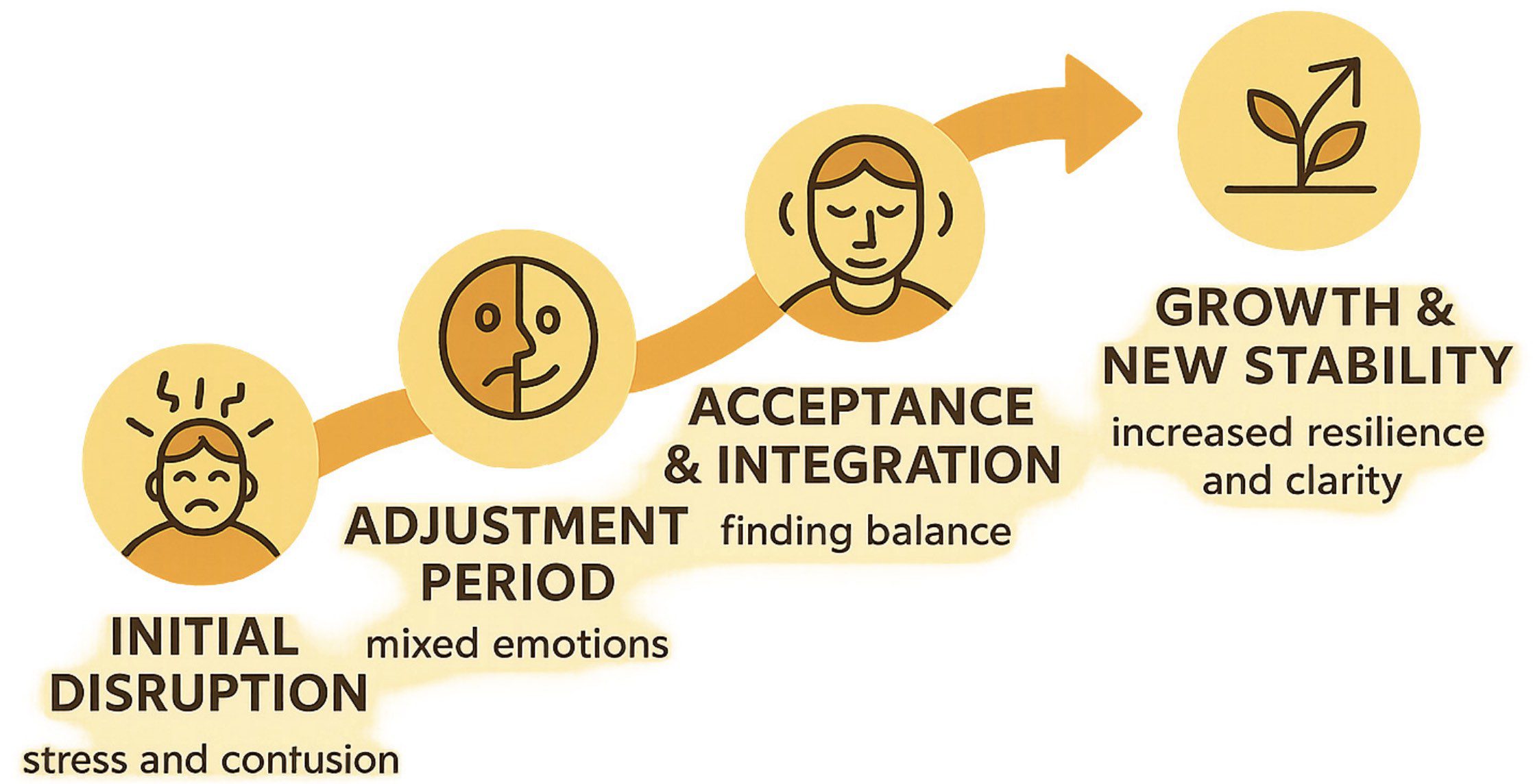
Allow yourself to move through the stages of grief at your own pace. There is no “right” way to grieve, and you may revisit certain emotions more than once. The stages – denial, anger, bargaining, depression, acceptance – are not linear. You may jump between stages or experience multiple stages simultaneously.
Recognizing that these feelings are temporary and part of the healing process can help you move toward acceptance and renewal. The Psychology Today guide on managing divorce emotions emphasizes that acceptance does not mean approval – it means making peace with what is so you can focus on what comes next.
The transition you are navigating today may be the foundation for a stronger, wiser, more authentic version of yourself tomorrow.
Self-Care and Routine
Major transitions often disrupt daily routines, amplifying feelings of chaos and uncertainty. Re-establishing structure – such as regular sleep, meals, and exercise – can provide a sense of normalcy and stability.
Activities like walking in nature, practicing mindfulness meditation, or engaging in hobbies can also nurture your well-being. The Positive Psychology resource on divorce counseling recommends creating a daily self-care checklist that includes basic needs: hydration, nutrition, movement, rest, and social connection.
Sample daily self-care checklist: Drink 8 glasses of water. Eat three balanced meals. Take a 15-minute walk. Get 7-8 hours of sleep. Call one friend. Do one thing that brings you joy (read, listen to music, garden).
Building a Support System
You were not meant to navigate major life transitions alone. A strong support system is one of the most powerful predictors of successful adaptation.
Lean on Social Support
Isolation can intensify distress during life transitions. Reaching out to friends, family, or support groups can provide emotional validation and practical advice.
For those going through divorce, organizations like The Lilac Tree offer tailored programs, support groups, and workshops to help individuals navigate the legal, financial, and emotional aspects of separation.
For job loss, professional networking groups and alumni associations can provide both emotional support and job leads. Online communities like Reddit’s Divorce subreddit offer anonymous peer support from others experiencing similar challenges.
For health-related transitions, disease-specific organizations (American Cancer Society, American Heart Association, Alzheimer’s Association) offer patient navigation, financial assistance, and support groups.
Professional Guidance
Therapists and counselors are invaluable resources during periods of upheaval. Therapy can help you process difficult emotions, reframe negative thoughts, and develop coping strategies.
For job loss, career counseling can assist in identifying transferable skills, exploring new career paths, and setting achievable goals. Many states offer free career counseling through workforce development offices.
For divorce, legal professionals or mediators can clarify your rights, streamline the process, and reduce conflict. The DivorceCare program offers faith-based support groups across the country. The Insight Northwest Counseling center specializes in life transition therapy.
For health-related transitions, patient advocacy organizations and disease-specific support groups can provide medical information, financial assistance resources, and emotional peer support. Hospital social workers can also connect you with resources.
Practical Strategies for Moving Forward
Emotional support is essential, but practical action creates momentum. Below are specific strategies for different types of transitions.
Divorce: Navigating the Legal and Financial Maze
-
Understand State Laws: Divorce requirements differ dramatically by state. Some states require a one-year separation period before filing. Others have waiting periods of 60 to 180 days after filing. Some are “no-fault” while others consider fault grounds. Educate yourself on your state’s policies to avoid surprises and delays.
-
Financial Planning: Divorce often brings significant financial changes. Consider consulting a Certified Divorce Financial Analyst (CDFA) to help with asset division, budgeting, tax implications, and planning for future needs. The HelpGuide divorce resource offers excellent financial checklists.
-
Prioritize Children’s Well-Being: If children are involved, focus on their needs and maintain open, age-appropriate communication. Co-parenting apps like OurFamilyWizard and TalkingParents can help manage schedules, track expenses, and reduce conflict.
-
Explore Mediation: For less contentious divorces, mediation can be a cost-effective and collaborative way to resolve disputes without lengthy court battles. Mediation typically costs $3,000 to $8,000 – far less than the $50,000+ cost of litigated divorce.
-
Protect Your Mental Health: The Matthew Penick Law guide offers specific coping strategies for maintaining mental health during legal proceedings.
-
Update Estate Documents: After divorce, update your will, beneficiaries, power of attorney, and healthcare directives. Your ex-spouse should no longer be your primary beneficiary or healthcare decision-maker.
Job Loss: Reclaiming Confidence and Opportunity
-
Assess Your Finances: Review your budget immediately. Cut unnecessary expenses. Calculate how long your savings will last. Explore unemployment benefits (apply immediately – there is often a waiting week). The Economic Policy Institute offers guidance on navigating unemployment benefits.
-
Understand Your Severance: If offered a severance package, review it carefully. Consider having an attorney review it. Do not sign immediately – you typically have 21 to 45 days to consider.
-
Evaluate Health Insurance Options: Job loss triggers a special enrollment period for COBRA, marketplace plans, or spousal coverage. The ACA marketplace often offers more affordable options than COBRA, which typically requires you to pay the full premium plus a 2% administrative fee.
-
Upskill and Network: Many workers are turning to upskilling and alternative work arrangements, such as freelance or gig work, to adapt to changing job markets. Networking – both online (LinkedIn) and in person – can open doors to hidden job opportunities. Approximately 70-80% of jobs are never publicly advertised.
-
Maintain a Routine: Structure your days to include job searching, skill development, exercise, and self-care. Setting daily goals, even small ones, can provide a sense of accomplishment.
-
Reframe the Narrative: Job loss, while difficult, can also be an opportunity for self-discovery and career realignment. Reflect on what you truly want from your next role and pursue paths that align with your values and strengths.
-
Access Free Resources: Your local American Job Center offers free career counseling, resume workshops, and job search assistance. Many public libraries offer free access to LinkedIn Learning and other upskilling platforms.
Relocation: Managing the Stress of Moving
-
Research Before You Move: Understand cost of living differences, housing markets, job opportunities, and community resources in your new location. Websites like Niche.com and City-Data.com offer detailed community profiles.
-
Build Connection Quickly: Join local groups, attend community events, volunteer, or use apps like Meetup to find people with similar interests. Consider joining a local gym, place of worship, or book club.
-
Maintain Old Connections: Schedule regular video calls with friends and family in your former location to ease the transition. Plan periodic visits if possible.
-
Give Yourself Time: Research suggests it takes 6-12 months to feel fully settled after a major relocation. Do not expect to feel at home immediately.
-
Explore Your New Area: Treat your new city like a tourist. Visit local museums, parks, restaurants, and landmarks. Learning your new environment reduces anxiety and builds familiarity.
-
Find a Healthcare Provider: Establish care with a primary care physician, dentist, and any specialists you need before an emergency arises.
Health Changes: Coping with Diagnosis or Chronic Illness
-
Build Your Medical Team: Find specialists you trust. Seek second opinions. Bring an advocate to appointments. Prepare questions in advance and take notes during visits.
-
Understand Your Benefits: Review your health insurance coverage, disability benefits, FMLA eligibility, and any employer accommodation options. Learn more about benefits audits here.
-
Access Support Resources: Disease-specific organizations (American Cancer Society, American Heart Association, Alzheimer’s Association, Arthritis Foundation, etc.) offer patient navigation, financial assistance, and support groups.
-
Prioritize Mental Health: Health diagnoses commonly trigger depression and anxiety. Seek counseling specifically for medical coping. Many hospitals offer free support groups for patients with specific diagnoses.
-
Build a Care Team: Enlist family and friends to help with transportation, meal preparation, childcare, and appointment attendance. Do not be afraid to ask for specific help.
-
Manage Medical Bills: Request itemized bills. Review for errors. Negotiate payment plans. Ask about financial assistance programs. Many nonprofit hospitals offer charity care for eligible patients.
The Financial Impact of Major Life Transitions
Major life transitions almost always have significant financial implications. Understanding these impacts can help you prepare and respond effectively.
-
Divorce financial impacts: The average divorced woman experiences a 20-40% decline in household income. Men experience a 10-20% decline. Legal fees, division of assets, potential spousal support, and separate household expenses all contribute to financial strain.
-
Job loss financial impacts: Workers who experience job loss lose an average of 20-30% of their earnings even a decade later. Savings depletion, retirement fund withdrawals, and increased debt are common consequences.
-
Relocation financial impacts: The average cost of an interstate move is $4,000 to $6,000. Additional expenses include security deposits, utility setup fees, new furniture, and potential housing cost increases.
-
Health change financial impacts: Cancer treatment alone can cost $10,000 to $200,000 or more. Chronic conditions require ongoing medication, specialist visits, and potentially home modifications or assistive devices.
For each transition, financial planning strategies include: creating an emergency budget, negotiating payment plans, accessing assistance programs, and seeking pro bono or sliding-scale professional services.
Embracing Change and Growth
While major life transitions are difficult, they also offer opportunities for profound personal growth. This phenomenon is called post-traumatic growth.
Cultivate a Growth Mindset
Major life transitions, though disruptive, can also be catalysts for growth. Embrace change as an opportunity to learn new skills, discover hidden strengths, and redefine your sense of purpose.
Set realistic expectations for yourself, recognizing that adjustment takes time – research suggests it can take up to 18 months to fully adapt to significant relationship changes. The Supportive Care guide emphasizes that post-traumatic growth – positive psychological change following adversity – is real and achievable.
Areas of potential post-traumatic growth: Greater appreciation of life. Stronger relationships. Increased personal strength. Recognition of new possibilities. Spiritual or existential development.
Practice Mindfulness and Gratitude
Mindfulness practices, such as meditation and deep breathing, can help ground you in the present and reduce anxiety. Apps like Calm, Headspace, and Insight Timer offer guided meditation specifically for transitions.
Focusing on small moments of gratitude – even during challenging times – can shift your perspective and foster resilience. Consider keeping a daily gratitude journal, writing down three things you are grateful for each day.
Set Boundaries and Rediscover Yourself
Transitions often require redefining boundaries, especially in relationships. Take time to rediscover your interests, passions, and goals outside of your previous role or relationship.
This process of self-exploration can be empowering and lay the foundation for a more fulfilling future. The Psychology Today guide on turning change into opportunity offers excellent exercises for self-discovery during transitions.
Self-discovery questions to consider: What did I enjoy doing before this transition? What have I always wanted to learn or try? What values matter most to me now? What does a good day look like for me going forward?
When to Seek Additional Help
If you find yourself overwhelmed by persistent sadness, anxiety, or hopelessness, do not hesitate to seek professional help. Warning signs include:
-
Inability to perform basic daily functions (bathing, eating, working)
-
Persistent sleep disturbances (insomnia or sleeping too much)
-
Significant changes in appetite or weight
-
Thoughts of self-harm or suicide
-
Substance use to cope
-
Withdrawal from all social contact
-
Persistent feelings of worthlessness or hopelessness lasting more than two weeks
Many community organizations and mental health providers offer sliding-scale fees or financial assistance. Remember, reaching out for support is a sign of strength, not weakness.
For immediate help, contact the SAMHSA National Helpline at 1-800-662-4357 (24/7, confidential, free, available in English and Spanish). For crisis situations, call or text 988 (Suicide and Crisis Lifeline).
For a quick assessment of your mental health, take this free 5-question mental health check.
If you are looking for a mental health provider, please schedule an appointment with our team.
Our Final Thoughts: Moving Forward with Confidence
Navigating major life transitions like divorce, job loss, relocation, or health changes is rarely easy, but it is possible to emerge from these experiences with greater resilience and clarity.
By honoring your emotions, building a strong support network, and embracing practical strategies for adaptation, you can transform periods of upheaval into opportunities for growth and renewal.
Remember, you are not alone. Millions of Americans face similar challenges every year, and countless resources – legal, financial, emotional – are available to help you on your journey.
With time, support, and self-compassion, you can chart a new course and thrive in the face of change. The transition you are navigating today may be the foundation for a stronger, wiser, more authentic version of yourself tomorrow.
Key Takeaways
-
45% of marriages end in divorce, with gray divorce (over age 50) now at 36% of all divorces among older adults
-
81% of US workers are worried about job loss in 2025, with unemployment at 4.2% and average duration of 21.4 weeks
-
27 million Americans relocate each year (9% of the population), and 133 million Americans (nearly half) live with at least one chronic condition
-
Emotional resilience requires acknowledging grief, maintaining routines, practicing self-care, and allowing time – up to 18 months for major transitions
-
Support systems include friends, family, support groups (The Lilac Tree, DivorceCare), professional counselors, and online communities
-
Practical strategies for divorce include understanding state laws, financial planning with a CDFA, co-parenting apps, mediation ($3,000-$8,000 vs $50,000+ litigation), and updating estate documents
-
Practical strategies for job loss include budgeting, applying for unemployment immediately, evaluating health insurance options, upskilling, networking, maintaining routine, and accessing free American Job Center resources
-
Practical strategies for relocation include advance research, building connections quickly, maintaining old relationships, allowing 6-12 months to settle, and finding healthcare providers promptly
-
Practical strategies for health changes include building a medical team, understanding benefits, accessing disease-specific resources, prioritizing mental health, and managing medical bills
-
Financial impacts of transitions include income declines of 20-40% (divorce), earnings losses of 20-30% (job loss), moving costs of $4,000-$6,000 (relocation), and treatment costs up to $200,000 (health)
-
Post-traumatic growth is possible: greater appreciation of life, stronger relationships, increased personal strength, recognition of new possibilities, and spiritual development
-
Seek professional help if unable to perform daily functions, experiencing persistent sleep disturbances, having thoughts of self-harm, or withdrawing from all social contact
-
Crisis resources: SAMHSA Helpline 1-800-662-4357, or call/text 988 for immediate crisis support
-
Employers can support workers through transitions by auditing mental health and outplacement benefits
This comprehensive guide was published on May 15, 2026. Sources include Pew Research Center, Clio, Purdue University, Staffing Industry, Trading Economics, BLS, Brookings Institution, NIH, U.S. Census Bureau, CDC, HelpGuide, Psychology Today, Positive Psychology, The Lilac Tree, DivorceCare, Insight Northwest Counseling, SAMHSA, Economic Policy Institute, The Supportive Care, Matthew Penick Law, American Cancer Society, American Heart Association, and Alzheimer’s Association.