
Uncategorized
The Unique Mental Health Needs of Veterans in America
Veterans’ Mental Health: Understanding Unique Challenges and Finding Support America’s veterans are a diverse and resilient group, yet their service...

Uncategorized


Loneliness is a deeply human experience, but in America today, it has reached epidemic proportions. Despite living in a world more connected than ever by technology, millions of Americans report feeling isolated, lacking meaningful relationships, and struggling to find a sense of belonging.
This comprehensive guide explores the scope of loneliness in the United States, its profound impact on physical and mental health, and practical, evidence-based steps for coping and building lasting social connections.
Recent surveys reveal a sobering reality. According to the American Psychiatric Association, 30% of American adults experience loneliness at least once a week, and 10% feel lonely every day.
Younger adults, particularly those aged 18-34, are more likely to report frequent loneliness compared to older adults (30% vs. 17% for those 65 and older). The U.S. Surgeon General has declared loneliness a public health epidemic, equating its health risks to smoking 15 cigarettes a day.
Chronic loneliness raises the risk of heart disease by 29%, stroke by 32%, and dementia by 50% among older adults. According to NPR, the health consequences of social isolation are comparable to obesity and physical inactivity.
The causes are multifaceted. Americans move more frequently, switch jobs often, and spend less time in face-to-face interactions than previous generations. The rise of remote work, declining community involvement, and increased screen time all contribute to a decline in social participation and trust.
Loneliness does not discriminate, but certain groups are more vulnerable. According to the CDC, the following populations experience higher rates of loneliness:
According to the Pew Research Center, men report having fewer close friends than women, and this gap has widened over the past three decades.
Geographically, loneliness is more common in the Deep South and Sun Belt states, often correlating with higher poverty rates. States with strong community engagement, such as Minnesota and Vermont, report lower levels of loneliness according to Advisory Board research.
Loneliness is more than a fleeting emotion; it is a serious risk factor for both physical and mental health. Research links chronic loneliness to:
The McLean Hospital notes that loneliness triggers chronic stress responses in the body, elevating cortisol levels and increasing inflammation. Over time, this physiological strain damages blood vessels, impairs immune function, and accelerates cellular aging.
For employers, loneliness also translates into lost productivity. According to the CDC’s NIOSH Science Blog, lonely employees miss more workdays and cost businesses billions annually in absenteeism, turnover, and reduced performance.
Humans are inherently social beings. Evolutionarily, belonging to a group was essential for survival. Our brains are wired to seek connection, and social bonds trigger the release of oxytocin, dopamine, and serotonin—neurotransmitters associated with pleasure, trust, and emotional regulation.
According to Harvard’s School of Public Health, the Harvard Study of Adult Development—one of the longest-running studies of adult life—found that close relationships are the single strongest predictor of happiness and health across the lifespan.
Conversely, loneliness activates the same neural pathways as physical pain. Functional MRI studies show that social rejection triggers activity in the anterior cingulate cortex, the same brain region that processes physical pain. This explains why loneliness genuinely “hurts.”
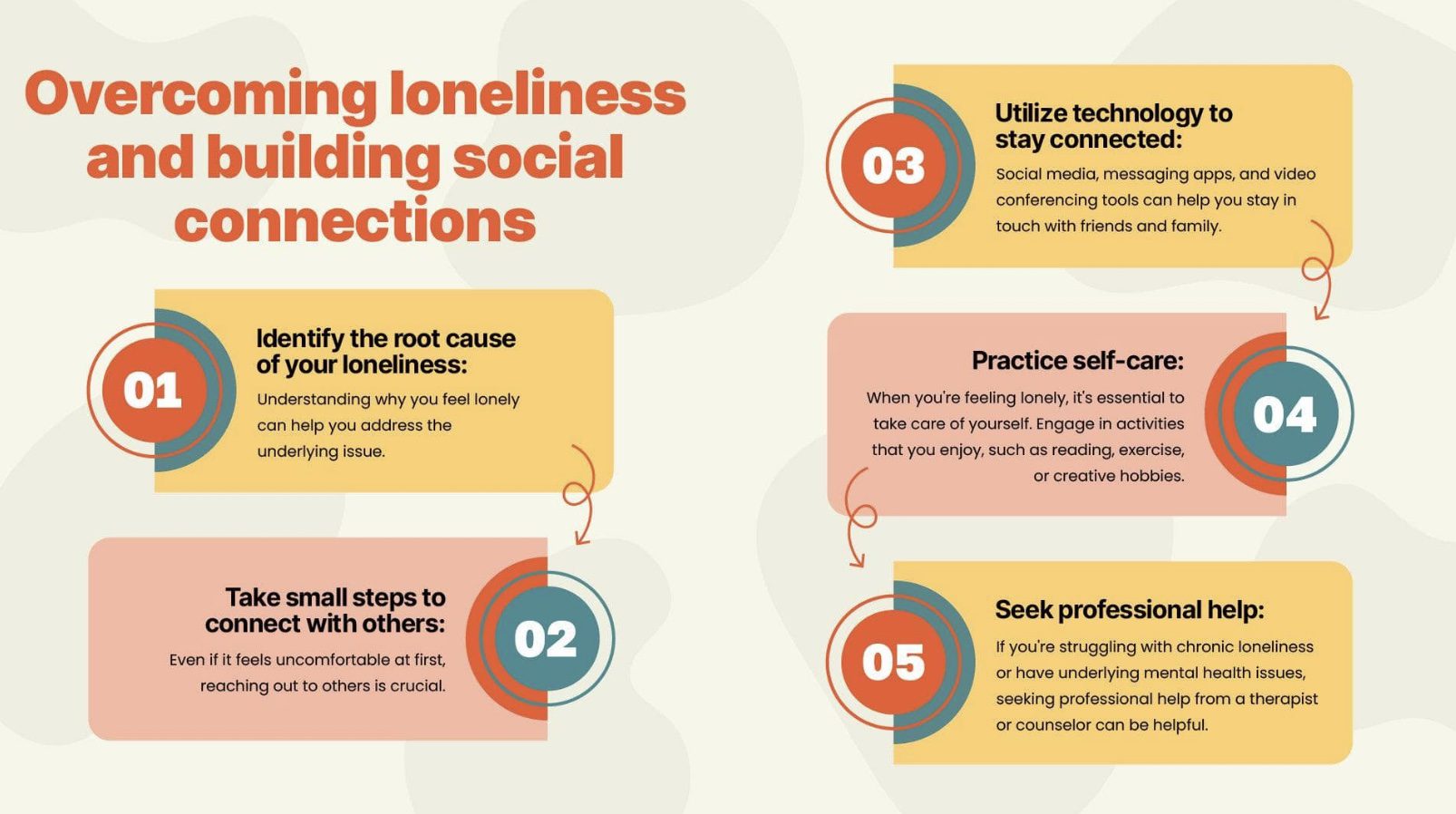
While loneliness can feel overwhelming, there are evidence-based ways to cope and gradually build social connections. The HelpGuide offers the following strategies.
Simply being around others in public places—parks, libraries, coffee shops, gyms—can ease feelings of isolation. This exposure makes future social interactions less intimidating and may even lead to spontaneous conversations. The Calm blog suggests starting with low-pressure environments where interaction is optional.
Reach out to friends, family, or neighbors, even if it is just a quick message or phone call. According to the CDC, taking time each day to connect with someone you care about is one of the most effective ways to combat loneliness. A 10-minute phone call can significantly reduce feelings of isolation.
Participate in hobby groups, sports leagues, book clubs, or classes that interest you. Shared activities provide natural opportunities to meet people and foster a sense of belonging. The Harvard Graduate School of Education emphasizes that repeated, unplanned interactions are key to forming friendships.
Helping others is a powerful antidote to loneliness. Volunteering not only benefits your community but also increases your own happiness and health while connecting you with like-minded people. The Action4Connection organization offers volunteer matching services.
Exercise, especially in group settings or public spaces, boosts mood and facilitates social interaction. Walking clubs, yoga classes, running groups, and recreational sports leagues are great ways to meet others while improving your health. The National Institute on Aging recommends senior centers and community exercise programs for older adults.
While excessive screen time can increase isolation, technology can also be a tool for connection. Use social media to interact (not just scroll), join online communities based on your interests, or attend virtual events. The American Psychological Association suggests setting specific time limits for passive scrolling and actively commenting or messaging instead.
Loneliness often triggers negative self-talk. Challenge these thoughts and treat yourself with the same kindness you would offer a friend. Mindfulness and relaxation techniques, such as meditation or guided imagery, can help manage stress and improve your outlook. The Mental Health America offers free mindfulness resources.
If loneliness persists or leads to depression or anxiety, consider talking to a mental health professional. Therapy can provide coping strategies and help you address underlying issues such as social anxiety, depression, or past relational trauma. BetterHelp offers online therapy options.
Coping with loneliness is only the first step; building and maintaining meaningful relationships is the key to long-term well-being. According to the CDC’s Social Connectedness resource, here are ways to cultivate deeper social connections:
It is not about the number of friends, but the depth of your relationships. Focus on nurturing high-quality, supportive connections where you feel seen, heard, and valued. One close confidant is more protective against loneliness than dozens of acquaintances.
Take the initiative to reach out, make plans, and invite others to join you. Sharing your feelings and being open about your experiences can foster intimacy and trust. According to the World Happiness Report 2025, young adults who proactively reach out report significantly higher well-being.
Show appreciation for the people in your life and offer support when they need it. Gratitude strengthens bonds and encourages reciprocity. Even small acts—a thank-you note, a listening ear, a home-cooked meal—build relational capital.
Do not let misunderstandings fester. Address conflicts directly and work toward resolution to maintain healthy relationships. The APA emphasizes that conflict resolution skills are essential for long-term relationship maintenance.
Broaden your circle by connecting with people from different backgrounds, ages, or interests. Diverse networks are linked to greater happiness, resilience, and cognitive flexibility. Intergenerational friendships, in particular, offer mutual benefits.
Get involved in your neighborhood, faith group, or local organizations. Community engagement fosters a sense of belonging and collective purpose. The Action4Connection organization provides tools for building community in your area.
Building social connections can be challenging, especially if you are struggling with health, finances, mobility, or social anxiety. Here are tips to overcome common barriers according to the CDC:
If you are feeling disconnected, remember that many others are experiencing similar challenges. Reaching out, even when it feels difficult, is a courageous first step.
Addressing loneliness is not just an individual responsibility. Communities and policymakers have a vital role to play. According to Johns Hopkins University, effective policy interventions include:
The Foundation for Social Connection advocates for federal and state policies to address loneliness as a public health priority.
If you are struggling with loneliness, these organizations offer free or low-cost resources:
For a quick assessment of your mental health, take this free 5-question mental health check.
If you are looking for a mental health provider, please schedule an appointment with our team.
Loneliness is a complex, widespread issue in America, but it is not insurmountable. By taking small steps—reaching out, joining activities, volunteering, or seeking professional support—you can begin to break the cycle of isolation and build meaningful connections.
Remember, you are not alone in feeling lonely. Millions of others are seeking the same sense of belonging and community. According to the More in Common report, most Americans want deeper social connections but feel unsure how to initiate them.
Together, through empathy, initiative, and systemic support, we can create a more connected and compassionate America. The first step is recognizing that connection is not a luxury—it is a fundamental human need and a public health priority.
Please note: This blog is for informational purposes only and is not a substitute for professional medical advice, diagnosis, or treatment. Always seek the advice of your mental health provider with any questions you may have regarding a medical condition.
This comprehensive guide was published on May 15, 2026. Sources include the American Psychiatric Association, U.S. Surgeon General, CDC, NPR, Pew Research Center, Harvard University, Johns Hopkins University, McLean Hospital, National Institute on Aging, APA, and the World Happiness Report.
JOURNAL
Uncategorized
Veterans’ Mental Health: Understanding Unique Challenges and Finding Support America’s veterans are a diverse and resilient group, yet their service...

Uncategorized
Therapist Tips for Parents Supporting Children’s Mental Health: A Complete Guide Children’s mental health is a growing concern in the...

Uncategorized
Americans are increasingly aware that what we eat doesn’t just shape our bodies—it profoundly affects our minds. The growing field...
Whether you're seeking support for yourself, your child, your relationship, or your family, we're here to help. Complete the form below, and we'll contact you to discuss your needs and schedule your consultation.
Direct Inquiry
info@ourmhm.org