


Understanding OCD: Symptoms, Statistics, and Treatment Options in America

Obsessive-Compulsive Disorder (OCD) is a complex and often misunderstood mental health condition that affects millions of Americans. Despite its frequent portrayal in popular culture as a quirky penchant for cleanliness or order, OCD is a serious and sometimes debilitating disorder that can dramatically impact a person’s quality of life.
This comprehensive guide provides a thorough understanding of OCD in the United States, exploring its symptoms, prevalence, impact, treatment options, and the unique challenges faced by those living with the disorder.
What Is OCD? Definition and Core Features
OCD is characterized by the presence of obsessions, compulsions, or both. According to the American Psychiatric Association, obsessions are intrusive, unwanted, and distressing thoughts, images, or urges that repeatedly enter a person’s mind. Compulsions are repetitive behaviors or mental acts that a person feels driven to perform in response to these obsessions, often with the aim of reducing anxiety or preventing a feared event.
For a formal diagnosis, these symptoms must be time-consuming (taking more than one hour a day), cause significant distress, and interfere with daily functioning at work, school, or in social relationships. OCD is not simply a matter of being overly tidy or organized; it is a chronic mental health condition that can be deeply disruptive.
The National Institute of Mental Health (NIMH) emphasizes that people with OCD are usually aware that their thoughts and behaviors are irrational, but they feel powerless to control them.
Symptoms and Common Subtypes of OCD
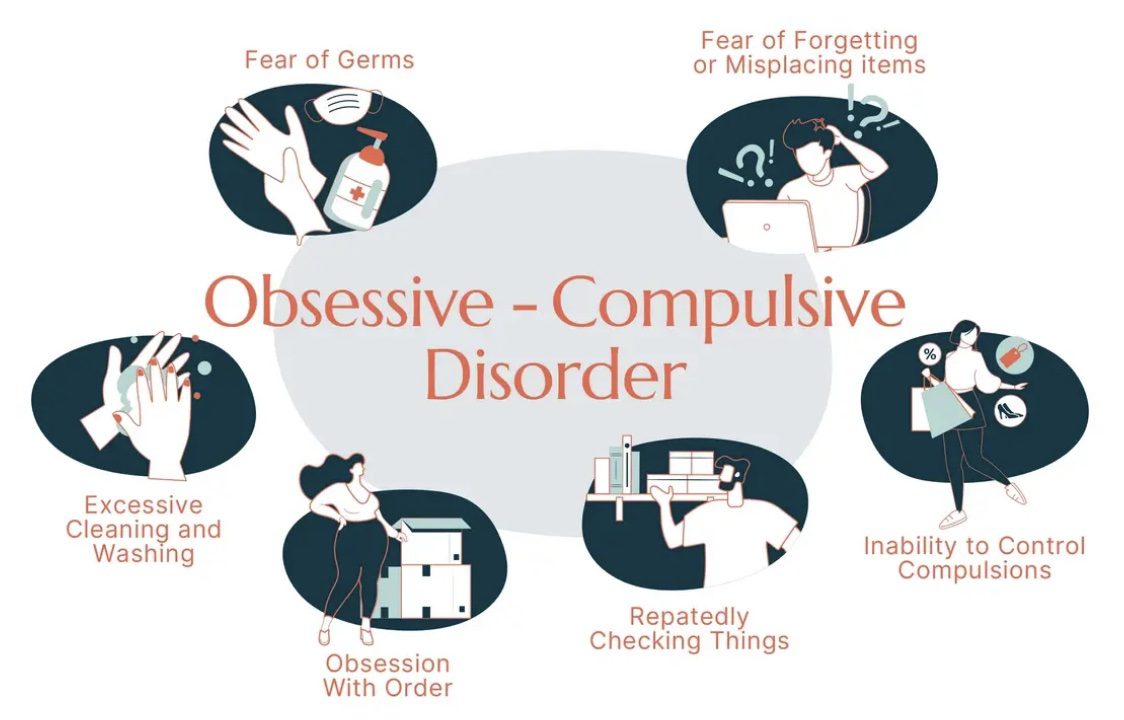
OCD manifests in a variety of ways, but the most common symptom themes include:
-
Contamination/Germs: Fear of germs, dirt, or illness, leading to excessive cleaning or handwashing.
-
Harm/Injury: Persistent fears of causing harm to oneself or others, often accompanied by checking rituals (locks, stove, appliances).
-
Symmetry/Order: An overwhelming need for symmetry, order, or things to be “just right,” resulting in arranging or repeating behaviors.
-
Hoarding: Difficulty discarding items, regardless of value, due to fears of needing them later or causing harm by discarding them.
-
Forbidden or Taboo Thoughts: Intrusive thoughts related to sex, religion, or aggression, which are distressing and unwanted.
According to the International OCD Foundation (IOCDF), people with OCD often experience multiple symptom themes over their lifetime, and the specific focus of obsessions and compulsions can change over time.
Prevalence and Demographics of OCD in America
OCD is more common than many realize. In the United States:
-
1.2% of adults experience OCD in any given year, which translates to about 2.5 million people.
-
Lifetime prevalence is estimated at 2.3% of the U.S. population.
-
Women are more likely to be affected than men, with 1.8% of women and 0.5% of men experiencing OCD in a given year.
-
OCD often begins in childhood, adolescence, or early adulthood, with the average age of onset around 19 years. Onset after age 35 is less common but possible.
-
Among children and adolescents, the prevalence is estimated at 1-3%, with as many as 500,000 children and teens affected in the U.S.
The Anxiety and Depression Association of America (ADAA) reports that OCD affects people of all races, ethnicities, and socioeconomic backgrounds at similar rates, though there are significant disparities in diagnosis and access to care among minority populations.
Severity and Impact of OCD on Daily Life
OCD is not a benign condition. It is ranked by the World Health Organization (WHO) as one of the top 20 causes of illness-related disability worldwide for people aged 15 to 44.
According to the NIMH, the impact in the U.S. is profound:
-
Half of adults with OCD (50.6%) report serious impairment, meaning their symptoms severely disrupt work, social, or family life.
-
Another 34.8% experience moderate impairment, and only 14.6% report mild impairment.
-
Without treatment, OCD tends to be chronic, with low rates of spontaneous remission.
OCD is also highly comorbid with other mental health conditions:
-
76% have a lifetime history of another anxiety disorder.
-
63% have a mood disorder, most commonly major depression.
-
Up to 29% have a history of tic disorders.
McLean Hospital notes that OCD can lead to social isolation, difficulties in maintaining employment or academic performance, and strained relationships with family and friends.
The Cycle of OCD: How Obsessions and Compulsions Feed Each Other
Understanding the OCD cycle is essential for both those who suffer from it and their loved ones. The cycle typically follows this pattern:
-
Trigger: An external situation, thought, or object triggers an obsession.
-
Obsession: An intrusive, unwanted thought or urge causes intense anxiety or distress.
-
Distress: The individual experiences significant emotional discomfort.
-
Compulsion: The individual performs a repetitive behavior or mental act to neutralize the obsession.
-
Temporary Relief: The compulsion provides brief relief, but the obsession returns, often stronger than before.
This cycle reinforces itself over time. The relief from performing compulsions is only temporary, and the brain learns that the compulsion is “necessary” to reduce anxiety—even though the compulsion has no logical connection to the feared outcome.
According to the Mayo Clinic, this cycle can consume hours each day, leaving individuals exhausted and unable to focus on work, relationships, or personal interests.
People with OCD are usually aware that their thoughts and behaviors are irrational, but they feel powerless to control them.
Diagnosis and Common Misconceptions About OCD
Diagnosing OCD can be challenging. Symptoms often overlap with other mental health conditions, and many people are reluctant to seek help due to stigma or misunderstanding.
According to MedlinePlus, OCD is frequently misrepresented as a personality quirk or a desire for neatness, which trivializes the distress experienced by sufferers. Common misconceptions include:
-
Myth: “Everyone has a little OCD.” Fact: OCD is a serious mental health condition, not a personality trait.
-
Myth: People with OCD just need to relax. Fact: OCD is a neurobiological condition, not a lack of willpower.
-
Myth: OCD is always about cleanliness. Fact: OCD manifests in many ways, including harm, symmetry, taboo thoughts, and hoarding.
City Limits reports that people of color and those in marginalized communities are more likely to be misdiagnosed or to face barriers to accessing appropriate care, including stigma, lack of information, cultural beliefs, and financial or logistical obstacles.
Causes and Risk Factors for OCD
The exact cause of OCD is not fully understood, but research points to a combination of factors:
Genetic Factors: Family studies suggest a strong genetic component, particularly for childhood-onset OCD. According to the Stanford University School of Medicine, first-degree relatives of people with OCD have a higher risk of developing the disorder.
Neurological Factors: Brain imaging studies have shown differences in the structure and function of certain brain areas involved in regulating emotions and behaviors, including the orbitofrontal cortex, anterior cingulate cortex, and striatum.
Environmental Factors: Stressful life events, trauma, or significant changes can trigger or exacerbate symptoms in those predisposed to OCD. The COVID-19 pandemic, for example, presented unique challenges, particularly for those with contamination-related OCD.
According to Johns Hopkins Medicine, approximately 50% of OCD cases begin in childhood or adolescence, with early intervention associated with better outcomes.
Treatment Options for OCD: What Works
OCD is treatable, and many people experience significant improvement with appropriate care. The mainstays of treatment are:
Cognitive Behavioral Therapy (CBT) with Exposure and Response Prevention (ERP)
CBT, specifically Exposure and Response Prevention (ERP), is considered the gold-standard psychotherapy for OCD. ERP involves gradually exposing individuals to feared situations or thoughts while helping them resist performing compulsions.
According to Treat My OCD, ERP has been shown to significantly reduce OCD symptoms in 60-80% of patients who complete a full course of treatment.
Medication: Selective Serotonin Reuptake Inhibitors (SSRIs)
SSRIs are the most commonly prescribed medications for OCD and can be effective for many people. Common SSRIs used include fluoxetine (Prozac), sertraline (Zoloft), fluvoxamine (Luvox), paroxetine (Paxil), and escitalopram (Lexapro).
The Mayo Clinic notes that response rates to SSRIs can be as high as 40-60%, but relapse is common if medication is stopped abruptly.
Combination Therapy: CBT Plus Medication
Using both CBT and medication often yields the best results. According to a study published in the National Institutes of Health database, combination therapy has lower relapse rates than medication alone, especially when used in combination with ongoing ERP.
Long-Term Treatment Outcomes
NIMH research shows that long-term studies indicate more than half of patients achieve remission with ongoing treatment. Outcomes are generally more favorable in children and adolescents when treatment is started early.
Emerging and Experimental Treatments
For the 20-40% of people with severe OCD who do not respond to standard treatments, several emerging options show promise:
-
Deep Brain Stimulation (DBS): A neurosurgical procedure approved for treatment-resistant OCD. According to Science Daily, DBS involves implanting electrodes in specific brain areas to regulate abnormal activity.
-
Ketamine and Transcranial Magnetic Stimulation (TMS): Experimental treatments, including ketamine infusions and TMS, have shown rapid symptom relief in some studies. The NIH Record reports that ketamine can reduce OCD symptoms within hours, though effects may be temporary.
-
Advanced Neuromodulation: Newer forms of TMS and other neuromodulation techniques are being studied specifically for OCD. According to Brainsway, deep TMS has received FDA approval for OCD.
UChicago Medicine emphasizes that these treatments are typically reserved for severe, treatment-resistant cases and require specialized clinical teams.
Living with OCD: Daily Challenges and Coping Strategies
Living with OCD can be exhausting. The relentless cycle of obsessions and compulsions can consume hours each day, leaving little time or energy for work, relationships, or leisure.
According to NAMI, the disorder often leads to social withdrawal, shame, and secrecy. Many people with OCD are acutely aware that their thoughts and behaviors are irrational, but the anxiety is so intense that resisting compulsions feels impossible.
Practical coping strategies include:
-
Practicing mindfulness and staying grounded in the present moment
-
Gradually resisting compulsions with ERP techniques learned in therapy
-
Building a support network of understanding friends, family, or support groups
-
Maintaining a consistent daily routine for stability
-
Adequate sleep, exercise, and nutrition to support mental health
The Mind UK emphasizes that self-compassion is essential—recovery is a process, and setbacks are normal.
Barriers to Care and the Impact of Stigma
Despite the availability of effective treatments, many people with OCD do not receive adequate care. According to Psychiatric Services journal, barriers include:
-
Stigma: Misunderstandings about OCD and mental illness discourage people from seeking help.
-
Lack of Awareness: Many do not recognize their symptoms as part of a treatable disorder.
-
Access Issues: Financial constraints, lack of insurance, and limited availability of specialized providers, especially in rural or underserved areas.
-
Cultural and Language Barriers: These can further complicate access for minority communities.
The COVID-19 pandemic presented unique challenges, particularly for those with contamination-related OCD. According to City Limits, public health messaging about handwashing and cleanliness, combined with increased isolation, led to worsening of symptoms for many.
Resources and Support for Individuals and Families
Several organizations provide resources, support, and advocacy for individuals and families affected by OCD:
-
International OCD Foundation (IOCDF): Offers educational materials, directories of providers, support groups, and advocacy. Visit IOCDF
-
National Alliance on Mental Illness (NAMI): Provides information, support groups, and education for families. Visit NAMI
-
Anxiety and Depression Association of America (ADAA): Offers resources and guidance on co-occurring disorders. Visit ADAA
-
Emory University OCD Program: Offers specialized resources and treatment information. Visit Emory
-
Sheppard Pratt OCD Center: Provides resources and treatment information. Visit Sheppard Pratt
Treat My OCD notes that online communities, support groups, and educational materials can be valuable supplements to professional treatment, helping individuals feel less isolated and more empowered in their recovery journey.
For a quick assessment of your mental health, take this free 5-question mental health check.
If you are looking for a mental health provider, please schedule an appointment with our team.
Our Final Thoughts: Hope and Advocacy
OCD is a serious but treatable condition. Advances in research, greater public awareness, and improved access to evidence-based care are making a difference in the lives of those affected.
According to IOCDF, ongoing advocacy is crucial to reduce stigma, improve access, and ensure that everyone with OCD can receive the support and treatment they need.
If you or someone you know is struggling with OCD, reaching out for help is the first step toward recovery. With the right treatment and support, people with OCD can lead fulfilling, productive lives.
Key Takeaways
-
1.2% of U.S. adults (2.5 million people) experience OCD each year, with lifetime prevalence of 2.3%
-
OCD is characterized by obsessions (intrusive, unwanted thoughts) and compulsions (repetitive behaviors to reduce anxiety)
-
Common symptom subtypes include contamination, harm, symmetry, hoarding, and taboo thoughts
-
50.6% of adults with OCD report serious impairment in work, social, or family life
-
OCD is highly comorbid: 76% have another anxiety disorder, 63% have a mood disorder
-
Effective treatments exist: CBT with ERP (60-80% response rate), SSRIs (40-60% response rate), and combination therapy
-
Emerging treatments for severe cases include deep brain stimulation, ketamine, and TMS
-
Average age of onset is 19 years, with 500,000+ children and adolescents affected
-
Stigma and access barriers prevent many from seeking care, particularly in minority communities
-
Crisis resources: 988 (Suicide and Crisis Lifeline) or 1-800-662-4357 (SAMHSA Helpline)
This comprehensive guide was published on May 15, 2026. Sources include the American Psychiatric Association, National Institute of Mental Health, International OCD Foundation, NAMI, ADAA, Mayo Clinic, Johns Hopkins Medicine, Stanford University, McLean Hospital, and NIH.